Replacing a water heater in California: Title 24 rules for 2025
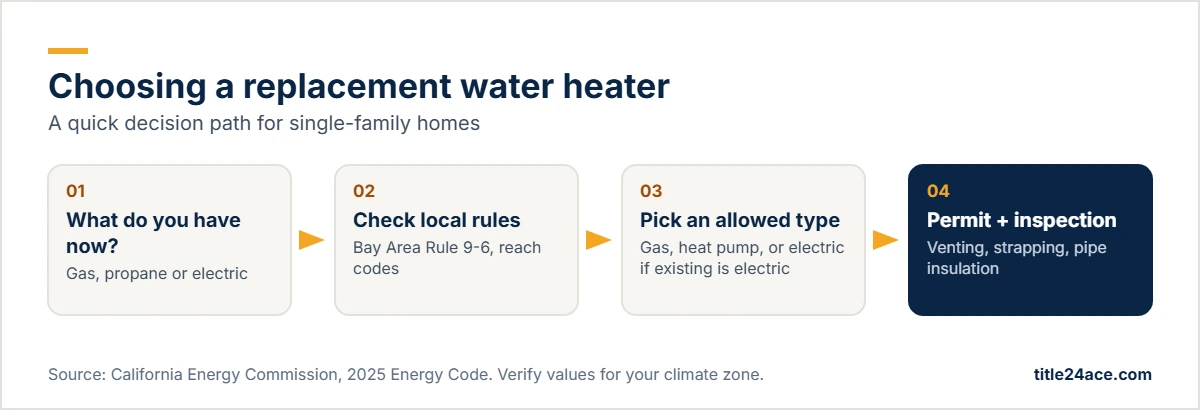
Under California's 2025 Energy Code, a replacement water heater can be gas or propane, a qualifying heat pump water heater, or electric if the old unit was electric. A permit is required, and local rules such as the Bay Area's Rule 9-6 may require electric.
When a water heater fails, most homeowners just want hot water back fast. In California, though, a water heater replacement is an alteration under the Energy Code (Title 24, Part 6). It needs a permit, and the new unit has to be one of the types the code allows. Here’s what the 2025 Energy Code says, in plain English.
Do you need a permit to replace a water heater?
Yes. Water heater replacements need a permit from your city or county building department in California. The inspector checks safety items, such as venting, seismic strapping and the pressure relief valve, along with Energy Code compliance. Many jurisdictions handle simple like-for-like replacements over the counter or online.
Which water heaters does Title 24 allow as a replacement?
Under Section 150.2(b)1H of the 2025 code, a replacement water heater for a single-family home can be:
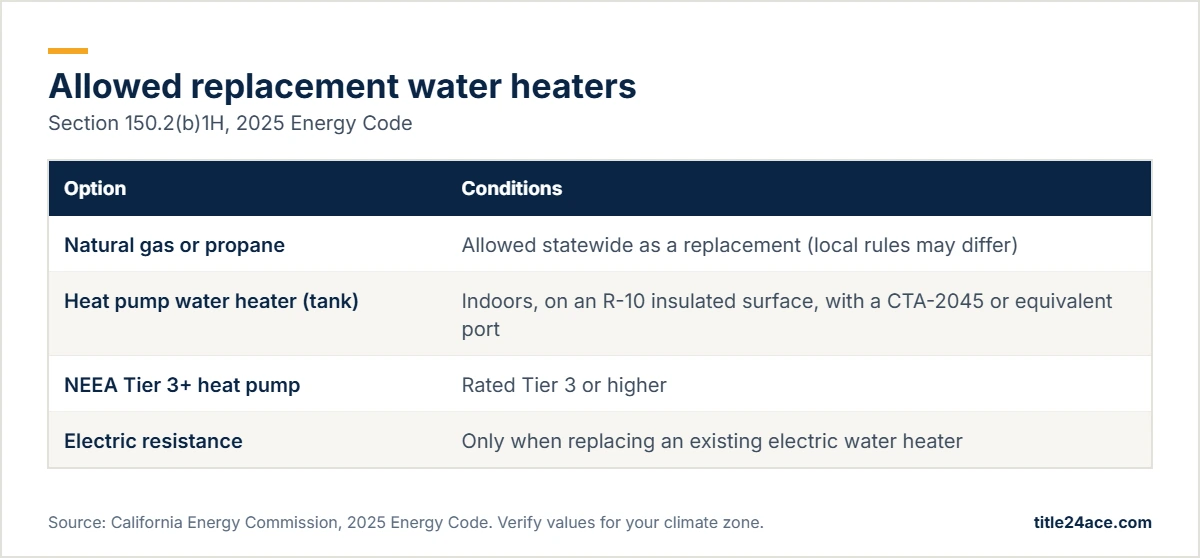
In other words, the state Energy Code does not force you to switch from gas to a heat pump when you replace a water heater. You can’t, however, swap a gas unit for a standard electric-resistance tank under this path.
Other requirements during a replacement
- Pipe insulation: accessible hot water piping must be insulated per the California Plumbing Code (Section 609.12).
- Recirculation pumps: new recirculation systems for a single home must be demand-controlled, with a manual on/off control or sensor. Pumps that run 24/7 aren’t allowed.
- Heat pump installation space: the 2025 code adds installation-space and ventilation requirements for heat pump water heaters. It also adds backup heating requirements when the unit draws air from an unconditioned space in colder climates.
Local rules that may require electric
The state code is only the minimum. Watch for:
- Air district rules: the Bay Area Air District adopted a zero-NOx standard (Rule 9-6) for residential water heaters installed at replacement, originally set for January 2027. In July 2026 the District proposed delaying it to January 2028 and adding exemptions, for example for some low-income owners and homes with small electrical panels. Check the current status if you’re in one of the nine Bay Area counties. In practice the rule means electric heat pump units once it takes effect.
- Local reach codes: some cities require heat pump equipment when systems are replaced.
Check with your building department before you buy, especially in the Bay Area.
Heat pump water heater tips
- Space and air: heat pump units pull heat from the surrounding air, so they need enough room or ventilation. A garage or large utility room usually works.
- Electrical: most need a 240-volt circuit. Some newer 120-volt plug-in models are designed for gas-to-heat-pump swaps without a panel upgrade.
- Condensate: plan a drain for the condensate line.
- Rebates: utility and state programs such as TECH Clean California often offer significant rebates. Check what’s available before buying.
When you need a full Title 24 report
A straight water heater swap usually just needs the permit and compliance form your jurisdiction uses. You’ll need a full computer-modeled CF1R when the water heater is part of a larger project, such as an addition, a garage conversion or an ADU. In those projects, the 2025 code generally expects a heat pump water heater unless the model shows another option still complies.
Worked example: gas tank to heat pump in a garage
A homeowner in Fresno (climate zone 13) has a 50-gallon gas water heater in the garage that’s starting to leak:
- Option 1, like-for-like gas: allowed by the state Energy Code. The plumber pulls a permit, the venting and seismic strapping are inspected, and the accessible hot water piping is insulated.
- Option 2, heat pump: a garage gives the unit plenty of air volume. The installer adds a 240-volt circuit (or picks a 120-volt plug-in model), runs a condensate drain and sets the tank on the required base. Utility rebates can cover a large share of the cost difference.
Planning ahead helps. Electrical and condensate work takes longer than a same-day gas swap, so many owners replace a water heater before it fails.
Common water heater permit problems
- No permit pulled for an emergency replacement, which surfaces later at home sale or inspection
- Missing seismic strapping or an incorrect pressure relief discharge line
- Uninsulated hot water piping at the heater
- A 24/7 recirculation pump instead of a demand-controlled one
- A heat pump unit squeezed into a small closet without enough air or ventilation
Frequently asked questions
Can I replace my gas water heater with a new gas one in California?
Under the 2025 state Energy Code, yes: natural gas or propane is an allowed replacement option. Local air district rules or reach codes may require electric, so check locally.
Does a heat pump water heater have to be inside?
For the prescriptive tank option, the code calls for the tank to be indoors on an R-10 insulated surface. NEEA Tier 3+ units have their own pathway.
Do I need a HERS or ECC Rater for a water heater replacement?
Usually not for a simple replacement. Field verification is more common for HVAC and duct work. Your permit documents will list any required verification.
Need Title 24 documents for your project?
Title24 Ace prepares residential Title 24 reports for remodels, additions, ADUs and new homes across California. See your price instantly and upload your plans online.
This article summarizes California Energy Commission guidance on water heater alterations under the 2025 Energy Code. It is general information. Local amendments and air district rules may add requirements, and your building department makes the final determination.
Related reading
This article is general information, not professional or legal advice. Always confirm requirements with your building department.
Ready to get your Title 24 report?
Upload your plans in minutes. We’ll handle the modeling, the forms and the plan-check revisions.